
This case study explores how market linkage services have transformed the lives of artisans in Tilakwada village, Narmada district, Gujarat, by connecting them to urban markets and significantly enhancing their income and quality of life.
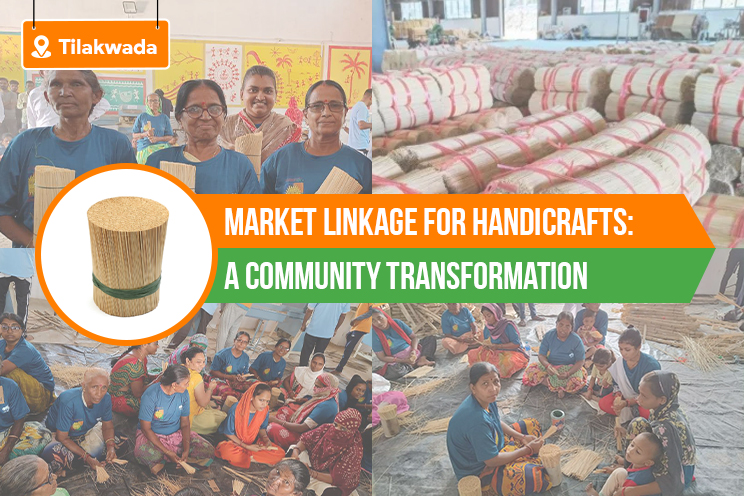
Tilakwada, a village in Narmada district, is part of India’s aspirational districts, which are undergoing substantial development to uplift impoverished and tribal communities. A notable initiative in the area is the “Bamboo Craft Cluster,” which focuses on producing high-quality incense sticks (agarbattis) from bamboo. This project aims to provide sustainable employment and promote local craftsmanship.
The Bamboo Craft Cluster in Tilakwada has received substantial support from the government, including 90% assistance for its development. Union Tribal Affairs Minister Arjun Munda highlighted the importance of this initiative during his visit, emphasizing that it helps recycle waste material into quality incense sticks. The initiative not only supports local artisans but also contributes to the self-reliant India vision championed by Prime Minister Narendra Modi.
Previously, India relied heavily on imports from China for incense sticks, with around INR 7,000 crores worth of incense imported annually. By fostering local production, the initiative aims to reduce this dependency and provide significant economic benefits. The bamboo-based handicrafts, including incense sticks, are gaining recognition and are now being marketed within India, creating new employment opportunities and enhancing local economic stability.
Kuberjee’s market linkage services played a crucial role in this transformation by connecting Tilakwada’s artisans with urban markets. Here’s how it unfolded:
The success of the Bamboo Craft Cluster in Tilakwada exemplifies the profound impact of effective market linkage services. By bridging the gap between rural artisans and urban markets, Kuberjee has empowered the community, enhanced their income, and contributed to the broader goal of economic self-reliance. This case study highlights how targeted support and market access can transform traditional crafts into thriving industries, benefiting both local artisans and the broader economy.